

-
 Ronaldo Schemidt/AFP via Getty ImagesThe crew of four — NASA astronaut and commander Randy Bresnik, European Space Agency pilot Luca Parmitano, NASA mission specialists Frank Rubio and Andre Douglas — are scheduled to launch next year.
 -
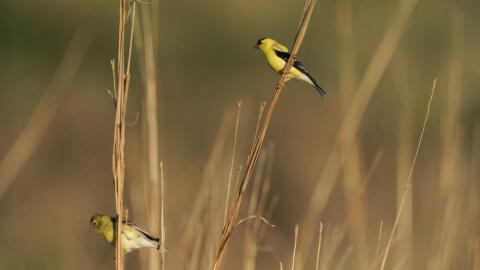 Joshua A. Bickel/APThe songbirds you see today are directly linked to the velociraptor, triceratops and T. rex.


-
Jupiter and Venus will appear close together in the sky Monday and Tuesday in what astronomy calls a "conjunction."
-
 The Indian government is spending $9 billion to create a megaport, airport and city on this remote island. Critics fear the impact on pristine forests and the lives of indigenous inhabitants.
 -
 New research suggests the fuzzy insects may be capable of spontaneously solving problems the way animals with much larger brains do.
 -
NPR's Eyder Peralta speaks with immunologist Nicole Baumgarth about why ticks are spreading to new regions, and what this increase in ticks could mean for the spread of Lyme disease.
-
The enamel on our teeth is the hardest tissue on the human body. A new study looks at the nanoscale structure of enamel from teeth dating as far back as 18 million years ago to see how it's changed.
-
 Scientists are building autonomous robotic labs powered by artificial intelligence. The goal, they say, is for these robots to take over human researchers' most laborious, time-consuming tasks.
 -
Homing pigeons rely on a variety of signals to navigate, including magnetism. But it hasn't been clear how they detect magnetic cues. Researchers propose the answer may be found in the birds' livers.
-
 In April, at a bald eagle's nest in Washington, D.C., there was much anticipation about eggs that were expected to hatch near the end of the month. Unfortunately, the nest failed, and the eagles have left it.
 -
After spending two decades studying how the brain works, a team of scientists prepares to focus on gene therapy treatments for brain diseases, including Alzheimer's and Parkinson's.
-
 Some were four times the size of today's great whites.


